Key Takeaways
-
Far infrared light in the terahertz gap frequency can turn off genes that govern skin cancer expression.
-
This type of light therapy is non-invasive and can penetrate deep into cellular tissues.
-
Infrared light therapy has shown promising results in both in vitro and in vivo studies.
-
Clinical trials indicate that it can be an effective treatment for non-melanoma skin cancers.
-
While generally safe, it is important to follow medical advice from doctors who know something about far infrared and take precautions when using far infrared light therapy.
Far Infrared Light in the Terahertz Gap Frequency Affects Genes That Govern Skin Cancer Expression
Introduction to Infrared Light and Terahertz Radiation
For over 40 years, I’ve been exploring natural remedies to combat various health issues, and one of the most intriguing discoveries has been the use of far infrared light, particularly in the terahertz gap frequency, to manage cancer and in this post we will focus on skin cancer. This type of light therapy is not just a futuristic concept but a reality backed by scientific research.
Infrared light is part of the electromagnetic spectrum, situated between visible light and microwaves. Terahertz radiation, often referred to as THz, lies between the near infrared and microwave regions. This type of radiation is non-ionizing, meaning it doesn’t have enough energy to remove tightly bound electrons from atoms or molecules and therefore doesn’t cause the kind of damage associated with ionizing radiation like X-rays. So it can’t hurt your DNA like stronger radiation can.
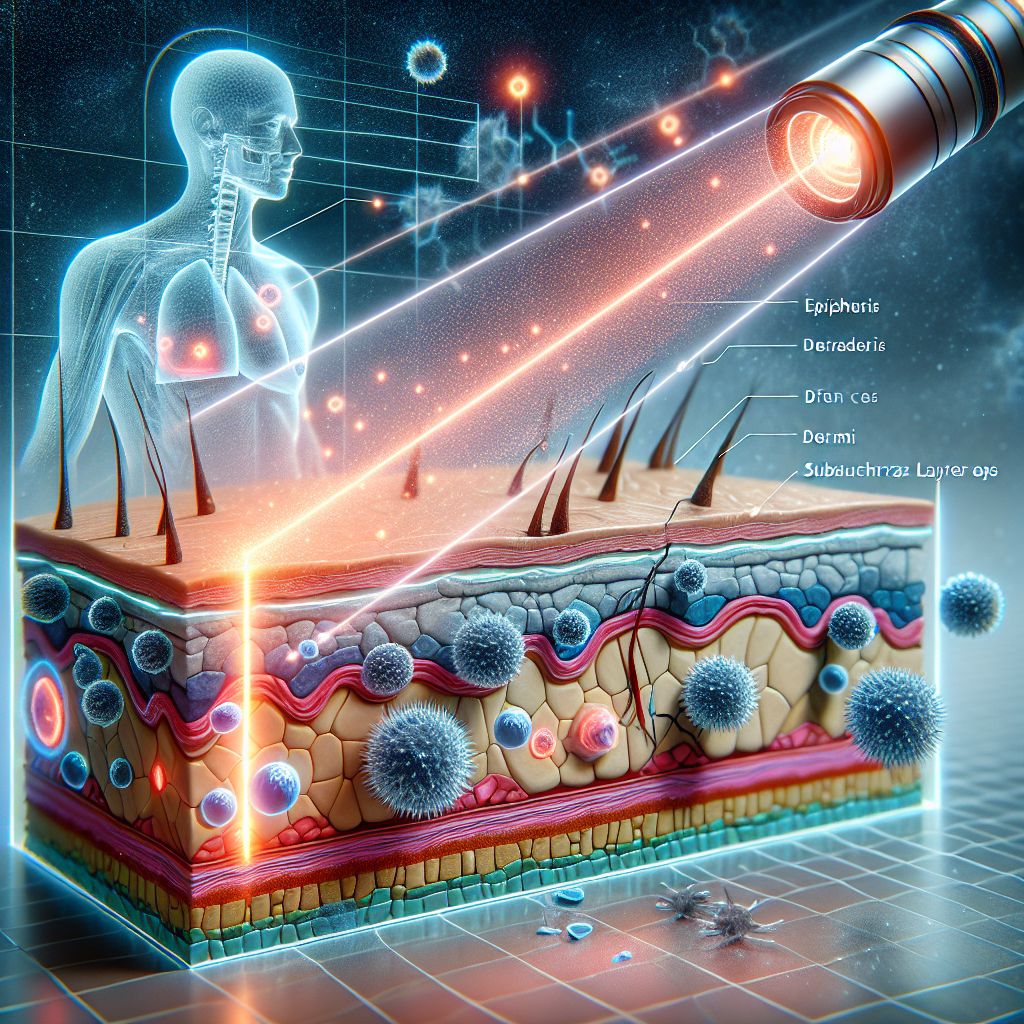
Most importantly, what sets far infrared light apart is its ability to penetrate deeper into the cellular tissues of the body. This deep penetration is crucial for therapeutic applications, especially when dealing with conditions like skin cancer.
Mechanisms of Gene Regulation by Infrared Light
One of the most fascinating aspects of far infrared light in the terahertz gap frequency is its ability to affect gene expression. In the context of skin cancer, this means turning off the genes that promote the development of cancerous cells. We call this “epigenetic” influence and has become the real frontier of gene therapy. But how does this happen?
When cells are exposed to this specific frequency of light, it triggers a series of biochemical reactions. These reactions can alter the expression levels of various genes, including those responsible for cell growth and differentiation. Essentially, the light acts as a switch, turning off the genes that would otherwise lead to the proliferation of cancerous cells. Many genes are what we call tumor suppression genes and they are supposed to be turned “on” to suppress cancer. Unfortunately many of these genes are not turned on because of a variety of environmental problems: pollution, both chemical and electrical (EMF).
It Turns Them Off Which Makes Skin Cancer Development Less Likely
Understanding the Genetic Mechanisms
The genetic mechanisms behind this process are complex but incredibly effective. When far infrared light in the terahertz gap frequency is applied, it interacts with the epidermal differentiation complex (EDC) genes. These genes play a crucial role in the development and maintenance of the skin’s outermost layer.
In skin cancer, particularly non-melanoma types, the EDC genes are often dysregulated. This dysregulation leads to uncontrolled cell growth and the formation of tumors. By targeting these specific genes, far infrared light therapy can help normalize their expression, thereby reducing the likelihood of cancer development.
-
Far infrared light therapy can penetrate deep into cellular tissues, reaching the affected areas more effectively.
-
The therapy interacts with the epidermal differentiation complex (EDC) genes, which are crucial for skin health.
-
By normalizing the expression of these genes, the therapy reduces the risk of uncontrolled cell growth.
Research on Infrared Light’s Impact on Skin Cancer Genes
Numerous studies have demonstrated the efficacy of far infrared light in the terahertz gap frequency in regulating genes associated with skin cancer. For instance, research conducted by Kazuko Tatsumura-Hillyer at Gaia Holistic Health revealed significant changes in gene expression levels when human skin tissue was exposed to intense THz (Terahertz) pulses.
“We found that intense THz pulses profoundly affect gene expression in directly exposed human skin. Exposure to THz pulses with an energy of 1.0 μJ for 10 minutes altered the levels of 442 genes associated with skin cancer.”
This research underscores the potential of this therapy as a non-invasive treatment option for skin cancer. By targeting the root cause—genetic dysregulation—infrared light therapy offers a promising alternative to conventional treatments.
While this is not a proof of effective treatment, this falls into the category of “it might help and it doesn’t hurt and it has a lot of other benefits”. These are exactly the kinds of strategies I look for in my quest for natural health approaches. Why? Because no drug company is ever going to invest millions of dollars to prove this “works”. And government research isn’t going to do that either because almost all of it is now controlled by the big drug companies. So I look for ways to “connect the dots” to start to see the big picture. As long as there is no harm and only benefit, I keep pursuing the strategy. This is one of those strategies: lots of benefit from far infrared light in multiple areas, no harm if done at the right energy level (which the technology I suggest happens to have) and as a “side effect” appears to have some benefit for skin cancer expression. This reassures me that it is not going to trigger a cancer at a deeper level where the signal is less strong.
Benefits and Applications in Skin Cancer Treatment
Far infrared light therapy in the terahertz gap frequency offers several benefits for treating skin cancer. Its non-invasive nature, combined with its ability to penetrate deep into the skin, makes it an appealing option for patients and healthcare providers alike. Let’s delve into some of these benefits and applications.
Non-invasive Diagnosis and Treatment Options
One of the standout features of far infrared light therapy is its non-invasive approach. Unlike surgical methods, this therapy does not require incisions or physical removal of tissue. Instead, it uses light waves to target and treat affected areas. This is particularly beneficial for patients who are not ideal candidates for surgery due to age, health conditions, or the location of the cancer.
Furthermore, the ability of far infrared light to penetrate deep into the skin allows it to reach and treat cancer cells that may be located beneath the surface. This deep penetration ensures that the therapy can effectively target and treat the root cause of the cancer, rather than just addressing the symptoms.
Pain Management and Healing
Besides its effectiveness in treating skin cancer, far infrared light therapy also offers significant benefits in pain management and healing. The light waves promote increased blood flow and circulation, which can help reduce inflammation and pain in the affected areas. This is particularly beneficial for patients experiencing discomfort or pain due to their cancer or other skin conditions.
Moreover, the therapy promotes faster healing by stimulating the production of collagen and other essential proteins in the skin. This not only helps in the recovery process but also improves the overall health and appearance of the skin. For more information on how far infrared light affects beauty, click here.
Safety and Efficacy of Infrared Light Therapy
As with any treatment, it is crucial to consider the safety and efficacy of far infrared light therapy. Fortunately, numerous clinical trials and research studies have demonstrated its effectiveness and safety in treating skin cancer and other skin conditions.
Clinical Trials and Research Findings
Several clinical trials have been conducted to evaluate the efficacy of far infrared light therapy in treating skin cancer. For example, a study by Hiroki Shima and colleagues found that far infrared rays could control prostate cancer cells both in vitro and in vivo. These findings suggest that the therapy has the potential to be effective in treating other types of cancer, including skin cancer.
“In human skin tissue, it was observed that intense THz pulses caused changes in expression levels of several cancer-related genes. This indicates the potential of far infrared light therapy as a viable treatment option for skin cancer.”
These studies provide compelling evidence that far infrared light therapy can effectively target and treat cancer cells, making it a promising alternative to traditional treatments.
Potential Side Effects and Precautions
While far infrared light therapy is generally considered safe, it is essential to be aware of potential side effects and take necessary precautions. Some patients may experience mild side effects such as redness, irritation, or a warming sensation in the treated area. These side effects are usually temporary and subside on their own. For more detailed information, you can read about the effects of far-infrared and terahertz therapy on various conditions.
It is crucial to follow medical advice and guidelines when undergoing far infrared light therapy for serious conditions. For general wellness it is truly a “do it yourself home therapy” option. Patients should consult with their healthcare provider to determine if this treatment is suitable for their specific condition and to discuss any potential risks or side effects.
Future Directions and Innovations in Skin Cancer Treatment
The field of far infrared light therapy is continually evolving, with ongoing research and technological advancements paving the way for new and improved treatment options. These innovations hold great promise for the future of skin cancer treatment.
Advancements in Infrared Light Technology
Recent advancements in infrared light technology have led to the development of more precise and effective treatment devices. These new devices can deliver targeted light therapy with greater accuracy, ensuring that the treatment reaches the affected areas without causing damage to surrounding healthy tissue.
Additionally, researchers are exploring the potential of combining far infrared light therapy with other treatment modalities, such as chemotherapy or immunotherapy. This integrated approach could enhance the overall effectiveness of cancer treatment and improve patient outcomes.
“The combination of far infrared light therapy with other treatment modalities holds great promise for the future of cancer treatment. By leveraging the strengths of multiple therapies, we can develop more comprehensive and effective treatment plans for patients.”
As research continues and technology advances, the potential applications of far infrared light therapy in skin cancer treatment will undoubtedly expand, offering new hope and improved outcomes for patients.
As we move forward, it’s essential to integrate far infrared light therapy with other existing treatment modalities to maximize its potential benefits for skin cancer patients.
Integration with Other Treatment Modalities
Combining far infrared light therapy with conventional treatments like chemotherapy, radiation, and immunotherapy can create a more comprehensive treatment plan. This integrated approach can help target cancer cells more effectively and reduce the likelihood of recurrence. While it is likely to be years before conventional oncologists to integrate this type of therapy, there are non traditional cancer treatment centeres that have been using far infrared light since the mid 1980’s.
For example, using far infrared light therapy alongside chemotherapy can enhance the drug’s effectiveness by increasing the permeability of cancer cells, allowing for better drug absorption. Similarly, combining it with immunotherapy can boost the body’s immune response, making it more effective in targeting and destroying cancer cells.
Besides that, integrating far infrared light therapy with traditional treatments can help manage side effects and improve overall patient well-being. The therapy’s ability to promote healing and reduce inflammation can alleviate some of the discomfort and pain associated with conventional treatments.
Frequently Asked Questions (FAQ)
To help you better understand far infrared light therapy and its applications in skin cancer treatment, here are some frequently asked questions:
How does infrared light affect skin cancer genes?
Far infrared light in the terahertz gap frequency can penetrate deep into cellular tissues and interact with specific genes, particularly those in the epidermal differentiation complex (EDC).(Part of the epigenetic control of gene expression). This interaction can turn off genes responsible for uncontrolled cell growth, reducing the likelihood of skin cancer development.
-
It targets and normalizes the expression of EDC genes.
-
Reduces the risk of uncontrolled cell growth.
-
Helps prevent the formation of tumors.
Is infrared light therapy safe for everyone?
While far infrared light therapy is generally considered safe, it may not be suitable for everyone. Patients with certain medical conditions or those who are pregnant should consult their healthcare provider before undergoing this treatment. It is essential to follow medical advice and guidelines to ensure the therapy’s safety and effectiveness.
Are there any side effects of using infrared light therapy?
Most patients experience minimal side effects from far infrared light therapy. Some may notice temporary redness, irritation, or a warming sensation in the treated area. These side effects typically subside on their own. However, it is crucial to follow medical advice and report any unusual or persistent symptoms to your healthcare provider.
How long does it take to see results from infrared light therapy?
The time it takes to see results from far infrared light therapy can vary depending on the individual’s condition and the severity of their skin cancer. Some patients may notice improvements within a few weeks, while others may require several months of consistent treatment. It is essential to follow your healthcare provider’s recommendations and maintain a regular treatment schedule to achieve the best results.
What future advancements can we expect in infrared light therapy for skin cancer?
As research continues and technology advances, we can expect several exciting developments in far infrared light therapy for skin cancer. These advancements may include more precise and targeted treatment devices, improved integration with other treatment modalities, and enhanced understanding of the therapy’s mechanisms and applications. Ultimately, these innovations will help improve patient outcomes and offer new hope for those battling skin cancer.
In conclusion, far infrared light therapy in the terahertz gap frequency holds great promise for treating skin cancer. Its ability to penetrate deep into cellular tissues and regulate gene expression makes it a powerful and non-invasive treatment option. By understanding the mechanisms behind this therapy and integrating it with other treatment modalities, we can offer patients a more comprehensive and effective approach to managing their condition. As research and technology continue to advance, the future of far infrared light therapy in skin cancer treatment looks brighter than ever.
Stanley Lang, M.D. has been in active medical practice since 1978. He has been a family physician during these years with detailed experience in all age groups including delivering babies for several years. He has been a pioneer in developing models of wholistic health care that bring health to the whole person. He has particularly focussed on reversing Chronic Stress effects on the body. He is the creator of the Shalom Method for Wholistic Health, and he has created several online programs that allow patients to naturally self manage their problems including “The Natural Lyme disease Treatment Program”, the “Menopause Balancing Program”, “The Happy Healthy Child” program plus many others.
Terahertz decreases gene expression for skin cancer
Intense THz pulses down-regulate genes associated with skin cancer and psoriasis…
Terahertz radiation may offer a potential treatment for cancer
Jun 2, 2020 — Terahertz radiation is a portion of the electromagnetic spectrum b…www.omicsonline.org
Effects of Far-Infrared and Terahertz Onnetsu Therapy on Cancer …
Far infrared rays are indispensable for maintaining life in healing, rejuvenatin…


Leave a Reply